Learns From You

The more you use it,
the better it quotes.

FieldForge learns three things from your real work: how fast you actually are — property by property — which prices win in your market, and what's worth interrupting you for. Not industry averages. Not a textbook. Your jobs, your numbers, your edge.

Every finished job teaches it something.
1
Your pace
Timed, completed jobs teach it your real square-metres-per-minute — down to the individual property. Time estimates stop being hopeful and start being yours.
2
Your market
Accepted and declined quotes teach it what your customers actually pay, job type by job type. New quotes anchor to the prices that win.
3
Your attention
The nudges you act on and the ones you dismiss teach it what matters to you. It speaks up about the right things and shuts up about the rest.
It knows you're faster
at some places than others.

Every timed job with a confirmed area teaches FieldForge your real working pace — and it learns it two ways. Per property: after a couple of visits it knows the Hendersons' backyard runs slow because of the dog toys and the slope. Trade-wide: across all your jobs it knows your honest average. Time estimates on new quotes come from those numbers, and quotes built on learned pace say so — with a badge showing how many completed jobs it's based on.

  • Learns real m²/min from timed, completed jobs
  • Per-property pace after just two visits — plus a trade-wide baseline
  • Only confirmed completions train it — quick swipes can't skew data
  • "Learned from N jobs" badge — you see what's behind the number
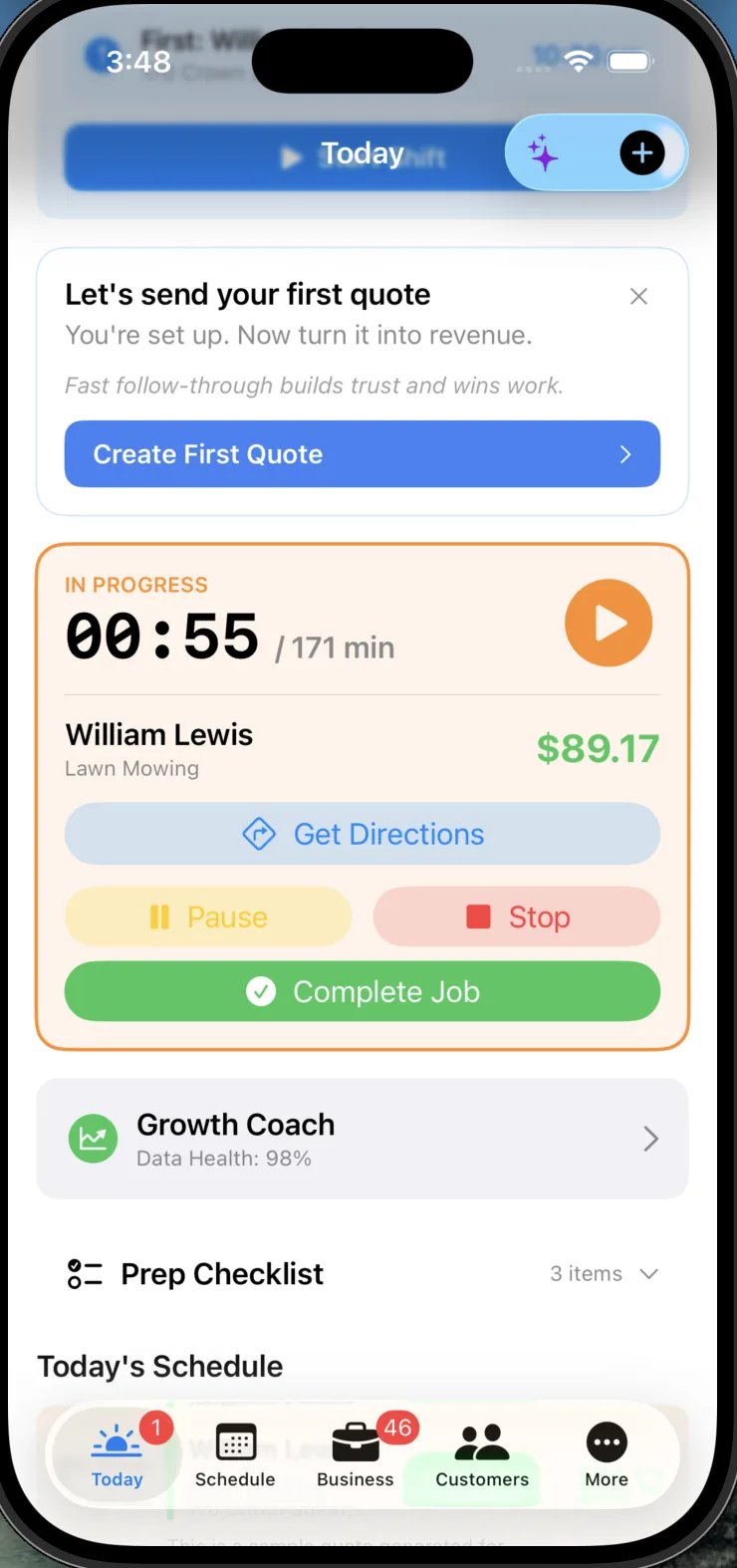
Job timer running on site — timed jobs teach FieldForge your real pace
It learns what wins —
and prices to it.

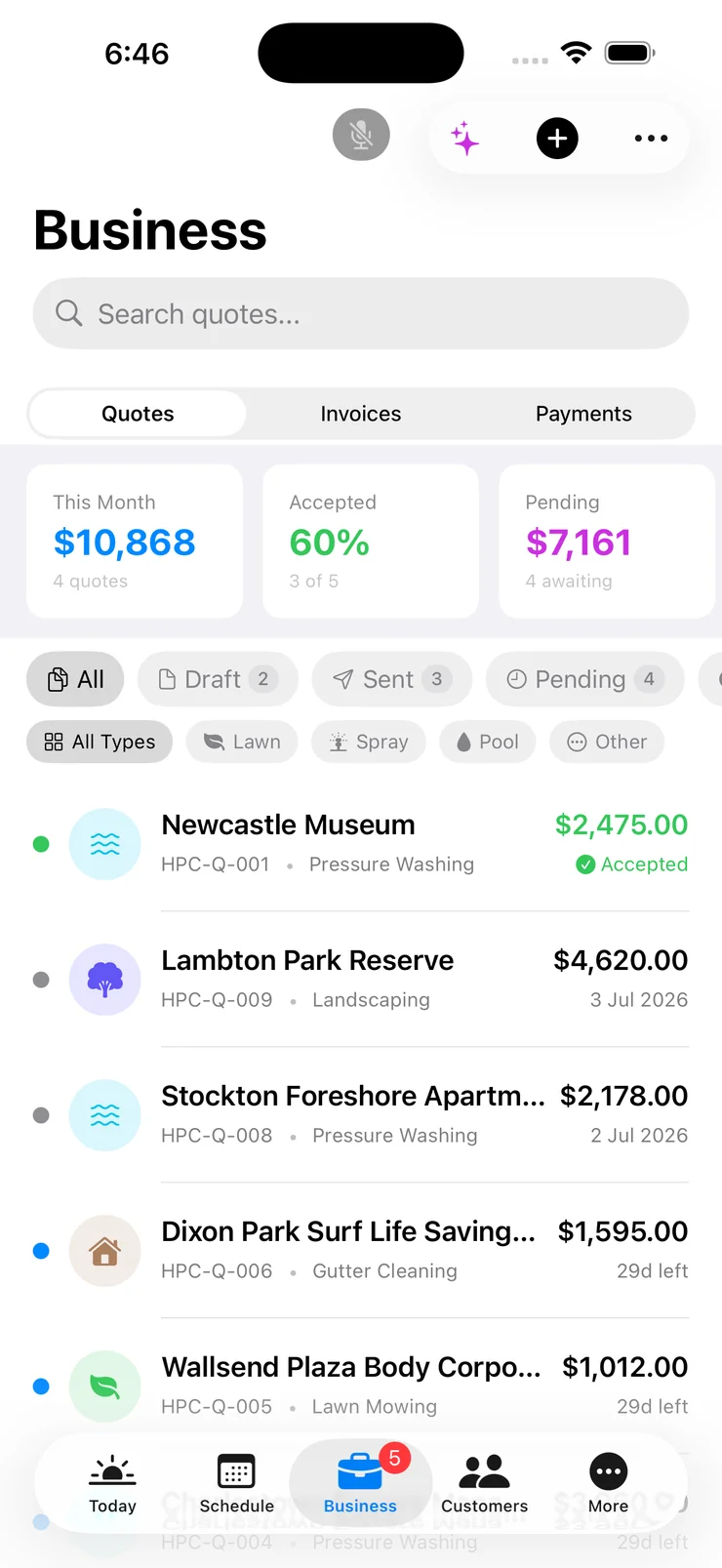
Every quote you send has an outcome, and FieldForge reads them all. Accepted, declined, and at what price — tracked per job type, automatically, from the moment the customer taps yes or no. Once a job type has a track record, new quotes anchor to the prices that actually close in your area, for your kind of customer. It's the difference between pricing from a gut feel and pricing from your own win rate.

  • Tracks accepted vs declined prices per job type — automatically
  • Anchors new quotes to what actually wins, not textbook rates
  • Learns from real customer decisions, not survey data
  • Your rates stay yours — the learning sharpens, never overrides
Quotes pipeline showing monthly value and acceptance rate — the outcomes FieldForge learns from
It learns when to speak up —
and when to shut up.

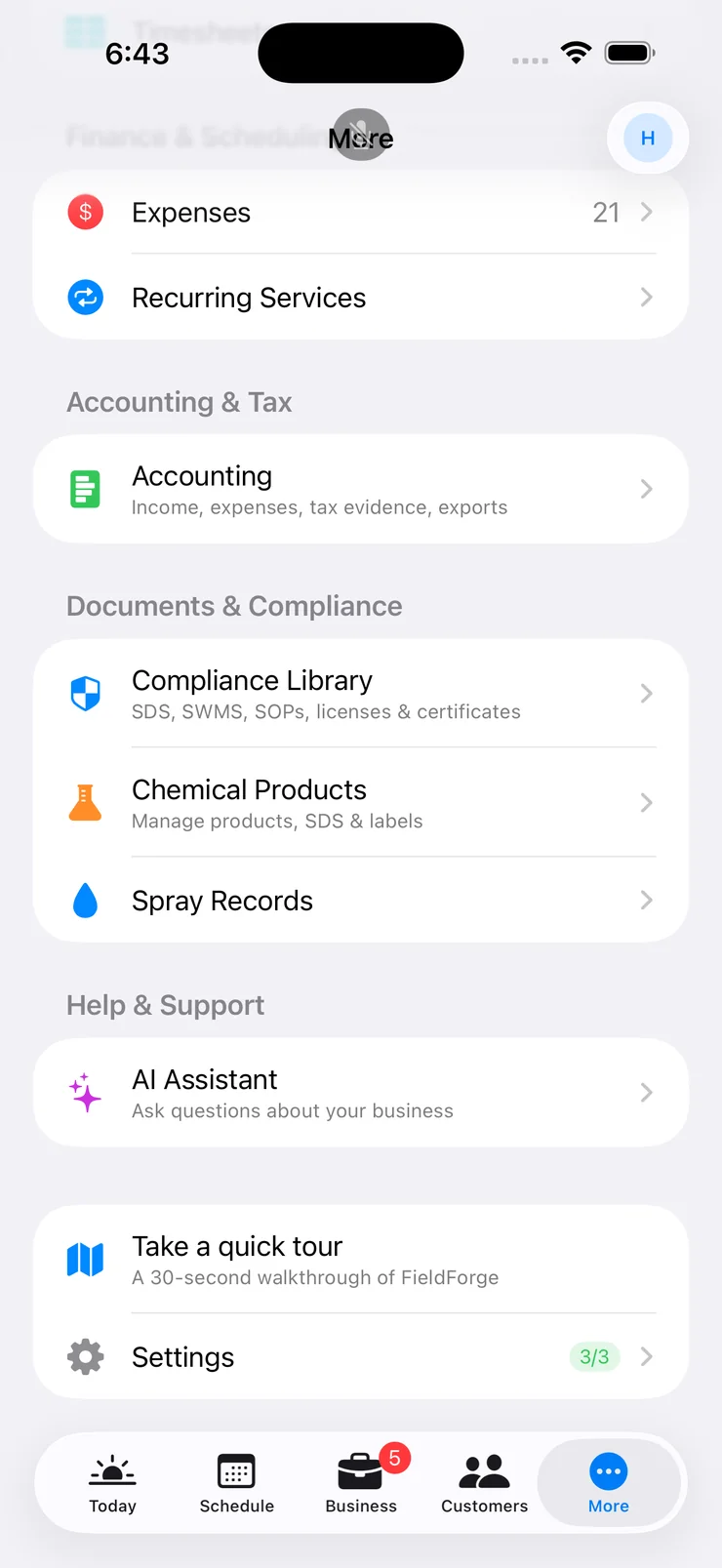
Most apps nag. FieldForge pays attention to what you do with its nudges. Act on the overdue-invoice reminders and it keeps them coming; dismiss the same suggestion three times running and it backs off. The threshold for what counts as "worth mentioning" flexes to you, and there's a daily cap so it never turns into noise. The result is an assistant that interrupts you about the $700 invoice, not the $7 one — because you taught it the difference.

  • Every nudge scored: acted on counts for it, dismissed against
  • Backs off a nudge type after repeated dismissals
  • Overdue-chase threshold flexes to what you actually chase
  • Daily nudge budget — helpful, never nagging
A proactive overdue-invoice nudge — the kind FieldForge learns to time and target
Learning is easy. Not learning rubbish is the hard part.
A learning system is only as good as what it refuses to learn from. FieldForge is picky on purpose.

Bad days excluded

Mower breakdown? Rain half the day? Mark the job as a one-off and it's recorded for your books but excluded from learning.

Confirmed completions only

Pace only trains when you properly complete a job and confirm the details — a quick swipe-through can't poison your numbers.

Sanity limits

Implausible readings — a pace no human hits, a timer left running overnight — get rejected before they touch your data.

Recent jobs count most

Learning runs on a rolling window of your latest jobs, so it reflects how you work now — new mower, new crew, new you.

Yours alone

What it learns from your jobs shapes your quotes only. Your pace and prices are your edge — never a shared pool.

You stay in charge

Learned numbers inform the draft; your rates and your final say never move without you. Override anything, any time.

Learning questions
Three streams of your own data: timed, completed jobs with confirmed areas (your real working pace), quote outcomes per job type (which prices get accepted and which get knocked back), and how you respond to its nudges (what's worth interrupting you for). All of it comes from your workspace — your jobs, your quotes, your taps.
No. When a job runs long you tell FieldForge why — and if the cause was a one-off like a breakdown or rain, the job is recorded for your records but excluded from learning. There are sanity limits on what counts as a believable pace, and learning uses a rolling window of recent jobs, so your numbers reflect how you work now, not a bad Tuesday in March.
No. What FieldForge learns from your jobs stays in your workspace and shapes your quotes only. Your pace, your prices and your patterns are your competitive edge — not a shared pool.
Fast. Pace learning starts adjusting per-property estimates after two timed jobs at the same property, with a trade-wide figure from three jobs anywhere. Price anchoring starts once a job type has a few quote outcomes to read. From day one you get sensible defaults; within a couple of weeks of normal work, the numbers are recognisably yours.
Yes — quotes that use learned pace show it, with a badge telling you how many completed jobs the estimate is based on, and your rates always remain yours to set and override. The learning sharpens your numbers; it never hides them.
Ready?

Start teaching it how you work.

14-day free trial with everything included. The first timed job starts the clock on quotes that know your pace.

Start Free Trial

No credit card. No demo call. Two minutes and you're in.